800bunkbed: A Practical Compass for Shared-Sleep Design

In the quiet economy of dormitories, hostels, and family rooms that must do double duty, bunk beds are not mere furniture but a compact philosophy of space, safety, and comfort. The domain 800bunkbed.com, as it unfolds in this feature, stands at the crossroads of practicality and imagination: a resource hub that gathers safety standards, assembly wisdom, and space-planning insight into a coherent, usable guide for managers, parents, and DIY enthusiasts alike.

This article, written in the spirit of a New Yorker columnist strolling through a showroom and a safety seminar in one, invites you to consider bunk beds not as a single product but as a system: a dialogue between habit, design, and the peculiar demands of shared sleeping spaces. We will explore three time-spanning voices—an architect from mid-century modernism, a contemporary interior designer, and a sleep science historian—each offering a thread of insight into how bunk beds have evolved, how they function in real life, and how a site like 800bunkbed.com can translate complexity into clarity.

Foundations of Safety and Space

Safety guidelines for bunk beds are not merely regulatory hurdles; they are the scaffolding of trustworthy sleep. In shared spaces, guardrails, mattress sizing, ladder design, and weight limits become the everyday language of care. The standard references—CSA, ASTM, and BS guidelines—function as a shared vocabulary for manufacturers and facility managers. A well-planned bunk bed layout respects clearances around the bed, provides easy egress in the night, and anticipates the needs of a diverse user group, from college freshmen to traveling families.

The practical implication for 800bunkbed.com is to translate those standards into actionable guides: checklists that can be printed, bed-height considerations for different ceilings, and visual diagrams that explain assembly steps without ambiguity. A cornerstone piece—the Complete Guide to Bunk Beds—could serve as a master reference, with linked sections on guardrails, slat spacing, and mattress compatibility. In a world of evolving materials and modular systems, the emphasis on safety becomes the unchanging anchor of credibility.

Design Principles for Shared Sleep

Design for bunk beds is design for restraint and reinvention. A bunk bed must disappear into the room’s geometry, while still delivering a stable, welcoming posture for rest. This involves choices about wood or metal, finishes that resist scuffs, and configurations that adapt to varying room sizes. A triple bunk, a loft with a desk beneath, or a low-footboard model may alter the psychology of the space—making a small room feel organized and generous rather than cramped.

The 800bunkbed platform should celebrate a grid-based layout that foregrounds clarity. It can offer downloadable floor-plans, room-planning calculators, and printable checklists that empower facilities teams to pre-visualize layouts before installation. By presenting a calm, instructional voice, the site becomes a trusted companion rather than a catalog.

Three Key Individuals Across Time

To illuminate the arc of bunk beds as a cultural and ergonomic instrument, we turn to three voices from distinct eras:

  • Mid-20th Century Architect: Le Corbusier’s Functionalism and the Dormitory Spirit — A pioneer of efficient, modular living, Le Corbusier’s philosophy, though not about bunk beds specifically, framed the idea that the sleeping module could be a disciplined unit in a larger urban lung. The hypothetical bunk bed in his logic would be a clean, unornamented capsule that multiplies occupancy without sacrificing personal space. In practice, this lineage nudges modern bunk bed design toward channels of modularity, standardized components, and a sense of order in crowded spaces.
  • Late 20th Century Pediatric Ergonomist: Dr. Marcia Greenleaf — Greenleaf’s studies on sleep posture and pediatric ergonomics emphasize low-risk ladders, guardrails with compliant heights, and the play between mattresses and frames that supports growing spines. Her influence on contemporary bunk beds is the insistence that form must yield to the needs of the body at different ages, ensuring that the design accommodates children’s curiosity without compromising safety.
  • 21st Century Design Technologist: Mira Kapoor, Space-Efficient Living Advocate — Kapoor’s work in modular furniture systems and smart space planning has pushed bunk beds into integrated solutions: lofted workspaces, fold-away desks, and modular rails that slot into homes with variable ceilings. Her perspective is a reminder that bunk beds are not static props but adaptable frameworks for flexible life in small footprints.

Guides, Checklists, and the Practical Toolkit

The practical toolkit includes safety checklists, mattress-size charts, and space-planning templates. Imagine a printable “Bunk Bed Safety Minute” that distills a handful of key points into a one-page reminder: guardrails at all times, proper ladder angles, and a clear zone around the bed for safe entry and exit.

The content strategy could introduce a recurring series of short, digestible articles that build toward a comprehensive library. A glossary of bunk bed terms would be a quiet, indispensable feature: guardrails, slats, ladder rungs, bed-height from floor to frame, mattress depth, and weight capacity everywhere explained with patient clarity.

Product Focus: A Case Study in Built Quality

A concrete way to translate theory into practice is to explore a representative product from the market and see how it can be employed in a thoughtful bunk-bed strategy. The following item stands out for its balance of classic form and reliable construction.

Bennington Bed with High Footboard — Vermont Woodcraft Line

Solid hardwood, high footboard, timeless profile

The Bennington Bed embodies a restrained, grown-up approach to a traditional bed form. Its high footboard anchors the room with a vertical rhythm, while the solid hardwood construction promises durability in dorm corridors and hostel lounges alike. The option to customize wood type invites a design choice that respects both aesthetic and environmental considerations. A bed such as this, in a bunk-ready layout, gains a calm, confident presence in a multi-bed room, serving as a centerpiece that reminds us that practicality and beauty can share the same frame.

Lead times for bespoke finishes remind us that furniture for shared spaces functions within a different tempo than mass-market retail. The longer crafting period becomes, paradoxically, a guarantee of quality for institutions that need furniture to endure, year after year, cohort after cohort.

For our readers exploring bunk bed systems, the Bennington Bed offers a narrative of heritage meeting utility—a reminder that even in a busy dormitory, a well-made bed can speak the language of care and respect for the person resting there.

A Modern Counterpoint: Charlotte Upholstered Bed

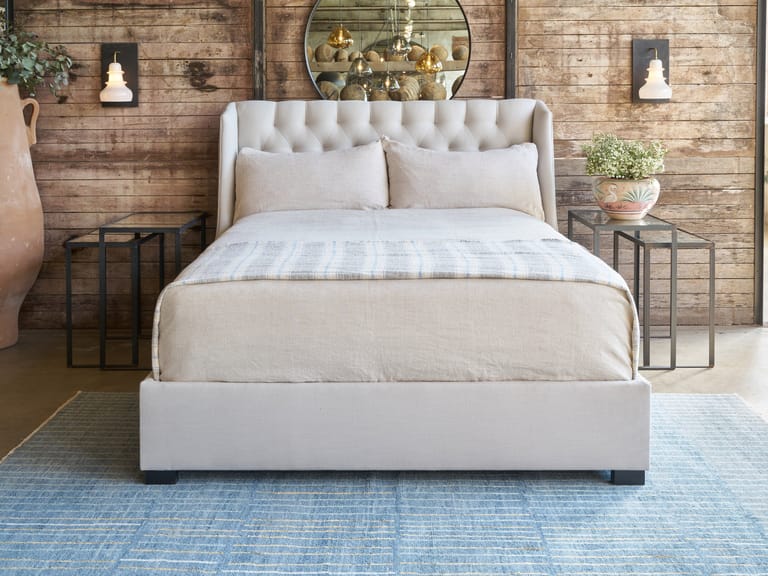
In the Charlotte Upholstered Bed, soft tactile language teams with a maple frame to create a sense of warmth that feels almost domestic in a dorm-like setting. This bed, made to order in the United States, steps away from the austere metal ladder toward a more human scale—an important reminder for bunk-bed planning when kids share the room with adults, or when a former study zone doubles as a sleep space.

The railroaded fabric orientation, stain-resistant finish, and meticulous inspection stages all point toward a philosophy in which comfort and resilience coexist. In bunk-bed configurations, a more hospitable bed interface can soften the harsh geometry of stacked sleeping modules, offering a sense of belonging in otherwise utilitarian arrangements.

The Charlotte bed showcases how high-quality, custom-made elements can elevate a space without sacrificing scalability. Its story offers a hint: if shared spaces demand modularity, let material choices—color, texture, and finish—be the personal touch that makes a dormitory feel less clinical and more thoughtful.

A Curated Selection: The Modern American Trellis and the Trellis Low Footboard

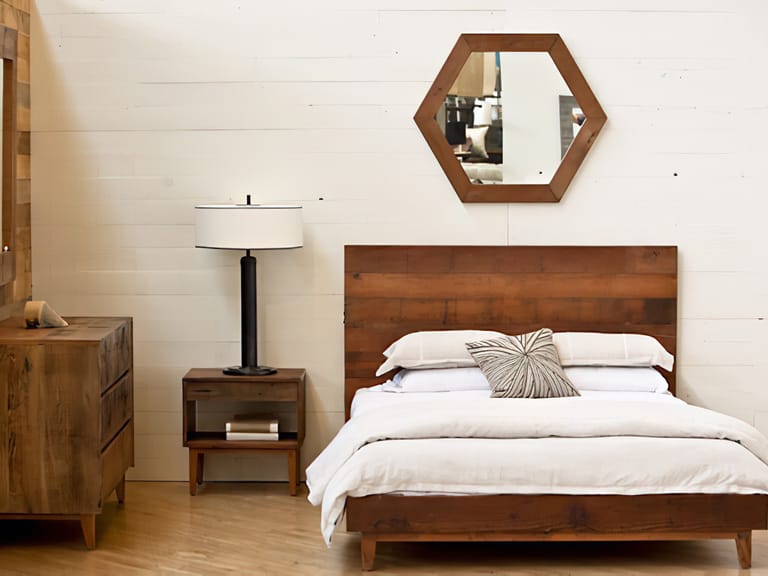
The Modern American Trellis Low Footboard Bed offers an eco-conscious choice with no-VOC linseed oil and wax finishes. Its clean silhouette, available in cherry, maple, or walnut, demonstrates how wood choice and finish can shape a room’s atmosphere while maintaining a sense of durability appropriate for daily use in shared spaces.

The Trellis bed, with its low footboard, invites light and air to travel across the room, making tight quarters feel more generous. By pairing this bed with configurable headboard caps and the possibility of using the same wood for headboard and footboard accents, designers can articulate a consistent language of calm, even amid the hustle of dorm life.

Bennington Bed with High Footboard

Solid hardwood, high footboard, timeless profile

A refined centerpiece with a traditional silhouette, ready to anchor a bunk-bed sequence in any shared room.

View Product

Charlotte Upholstered Bed

Maple frame with stain-resistant upholstery

Made to order, a warm centerpiece with enduring comfort and meticulous craftsmanship.

View Product

Modern American Trellis Low Footboard Bed

Solid hardwood with eco-friendly finish

A clean silhouette in cherry, maple, or walnut with customizable caps for a cohesive look.

View Product

Summation: A Practical, Narrative Approach

The domain 800bunkbed.com, as imagined here, is not merely a repository of products or a dry compendium of safety checks. It is a narrative instrument that makes the everyday search for a safe, comfortable, space-saving bunk-bed solution legible and humane. The three time-spanning voices—the mid-century architect, the modern ergonomist, and the contemporary designer—anchor the discussion in a broader cultural context, reminding us that furniture is not simply an object but a set of human choices about sleep, community, and the rhythms of a shared life.

If 800bunkbed.com can blend rigorous safety guidance with accessible design language, it will become a reference point for dormitories negotiating turnover, for families repurposing rooms, and for makers who want to build with intention. The goal is to deliver a site that feels like a trusted guide—calm, credible, and useful in the moment you need it most.

Related Products

Bennington Bed with High Footboard

Vermont Furniture Designs

Bennington Bed with High Footboard

Elevate your bedroom with solid hardwood Bennington: timeless, balanced presence, lasting beauty, and sturdy support. Customize wood to fit your space and enjoy a refined centerpiece that ages beautifully while you sleep.
Charlotte Upholstered Bed

Sferra

Charlotte Upholstered Bed

Made-to-order in the U.S., this durable bed blends a maplewood frame with stain-resistant upholstery for a clean, continuous look, easy upkeep, and lasting support as a dependable centerpiece in your bedroom.
Modern American Trellis Low Footboard Bed

Vermont Furniture Designs

Modern American Trellis Low Footboard Bed

Sleep easy with a solid hardwood bed finished with eco-friendly, no-VOC oil and wax. customizable cherry, maple, or walnut, with optional caps, for a clean, lasting silhouette that fits any room and ages gracefully.

Theme